
Johnson & Johnson
Crafting more connected experiences across a digital ecosystem.
Scope: Improve clarity and cohesion across a large, evolving corporate digital ecosystem.
My role: Senior Product Designer; contributed across research, strategy, interaction design, prototyping, testing, and high-fidelity UI.
Partners: Product, Brand, Development, and Design System teams.
Deliverables: Flows, wireframes, prototypes, responsive UI, and reusable interface patterns.
Focus: Use research, behavioral insights, and experimentation to improve customer-facing journeys.
The Job
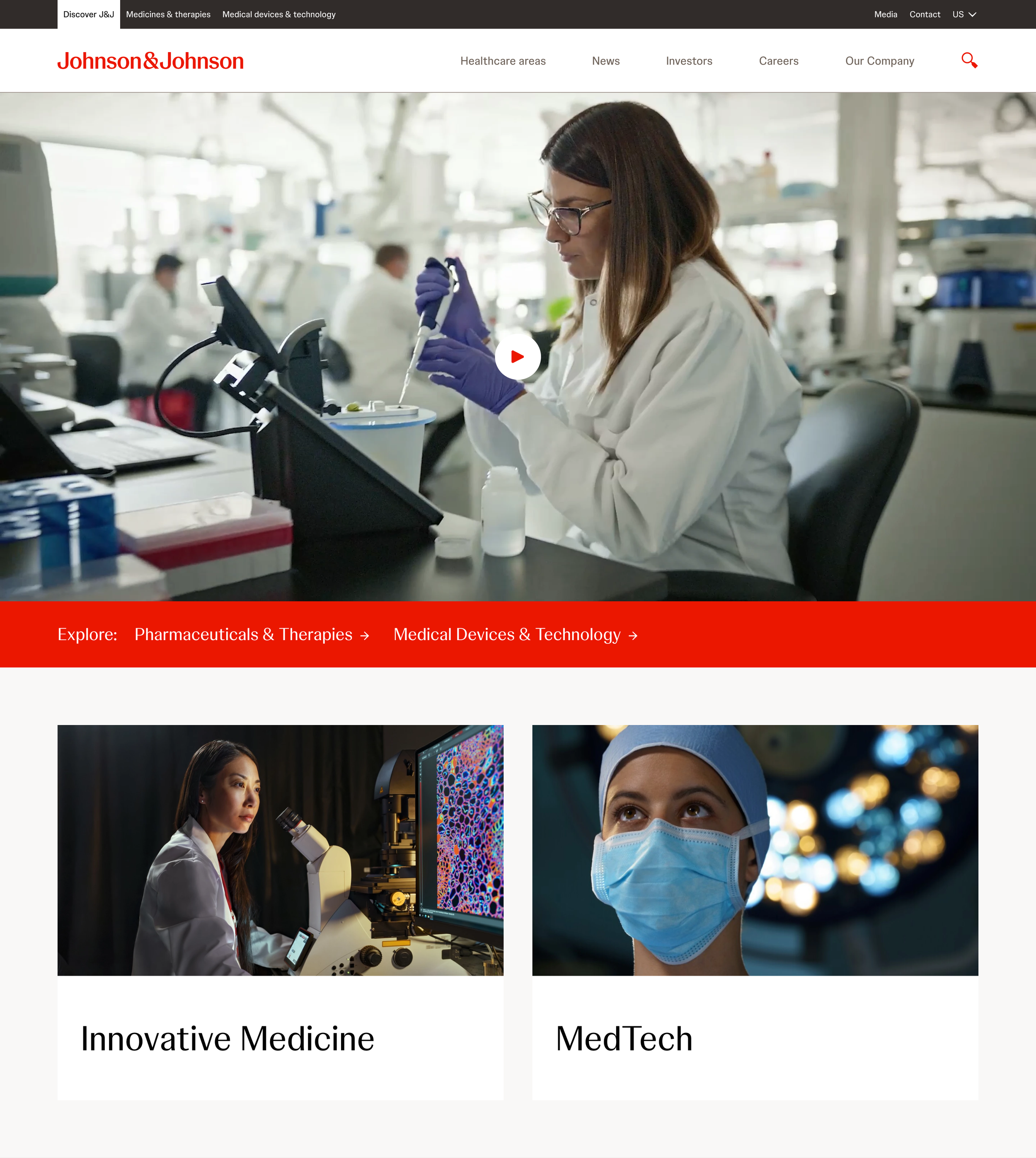
As a Senior Product Designer at Johnson & Johnson, I contributed to the end-to-end design of a large and continuously evolving corporate web ecosystem.
My role centered on understanding how people interacted with J&J's digital experiences, identifying opportunities to improve key journeys, and translating those insights into thoughtful, scalable product solutions.
I worked across research, strategy, interaction design, prototyping, testing, and high-fidelity UI—partnering closely with Product, Brand, Development, and Design System teams throughout the process.
The Overview
A global organization. A complex ecosystem. One connected experience.
Johnson & Johnson's digital presence spans a broad range of audiences, content, products, and business needs.
That scale creates a unique design challenge: experiences need to feel clear and cohesive for users while remaining flexible enough to support an organization that is constantly evolving.
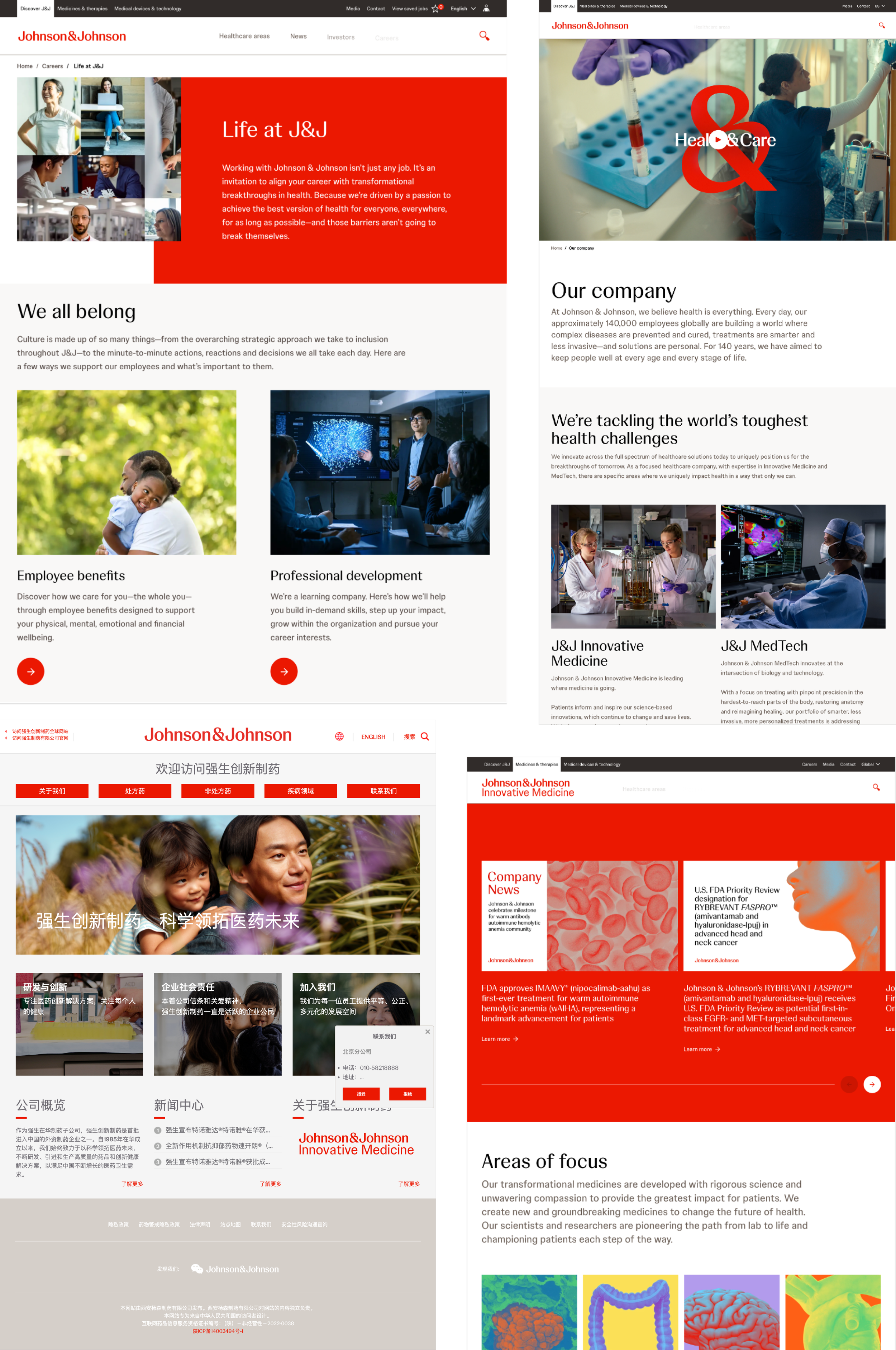
I contributed to customer-facing improvements across onboarding, content discovery, responsive web experiences, and reusable interface patterns.
The goal was not to redesign for the sake of change.
It was to use research, behavioral data, experimentation, and thoughtful design to make each experience more useful while creating a stronger foundation for what came next.
The Needs
Create experiences that could evolve without losing clarity.
Working within a large corporate ecosystem meant solving for both the immediate customer experience and the longer-term health of the product.
Understand behavior
Use user research, behavioral insights, and A/B testing to understand what was working, where users were encountering friction, and where opportunities existed to improve the journey.
Improve key journeys
Identify areas where navigation, onboarding, content discovery, or interaction patterns could be clearer and more effective.
Design for scale
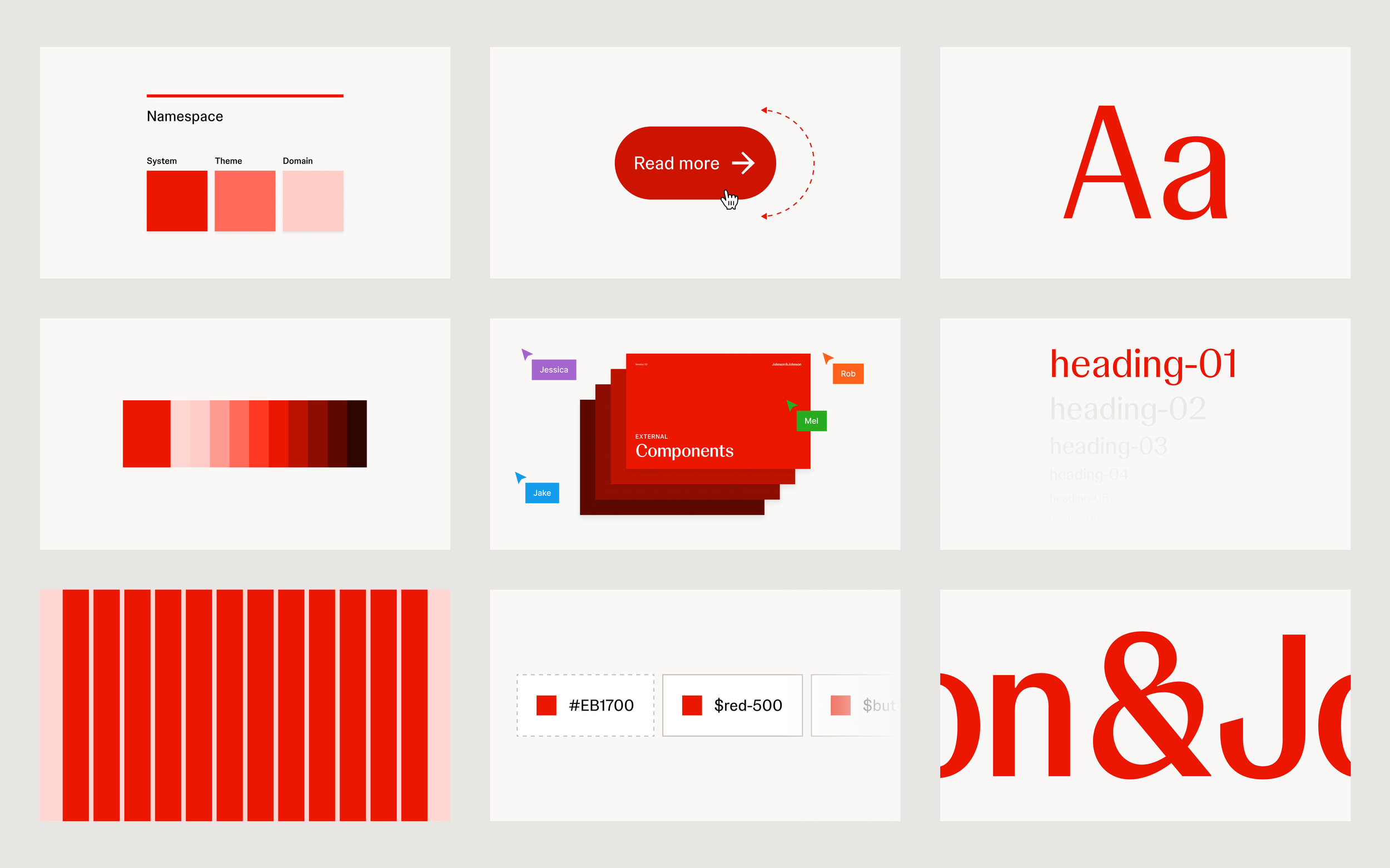
Create responsive experiences and reusable patterns that could work across a complex and evolving digital ecosystem.
Connect teams
Work closely with Product, Brand, Development, and Design System partners to balance user needs with business, technical, and brand considerations.
Accelerate exploration
Integrate Figma AI and UX Pilot into the design workflow to move more quickly through early wireframing and prototyping while maintaining design intent and fidelity.
The Approach
Start with evidence. Explore deliberately. Validate what matters.
The work followed the same principle throughout: use evidence to make better decisions, then bring enough rigor to the design process to make those decisions useful at scale.
01 — Understand
I began by bringing together the signals available across the ecosystem.
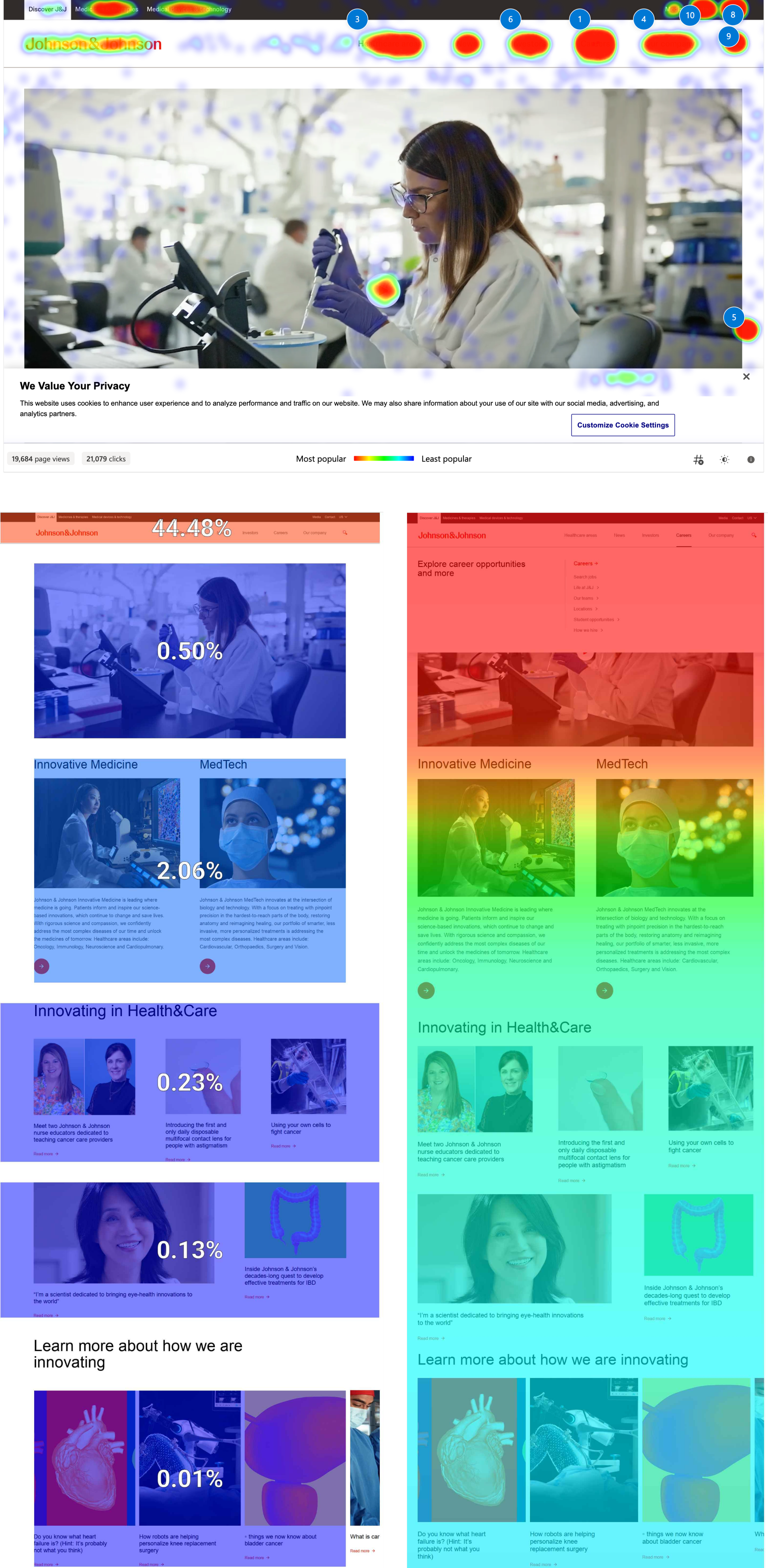
User research helped reveal needs and pain points. Behavioral insights showed how people were actually interacting with experiences. Heatmaps, Click rates, and CTR tracking provided yet another layer of evidence around what was improving or lacking in engagement and where further iteration was needed.
The goal was to move beyond assumptions and understand where design could have the greatest impact.
02 — Explore
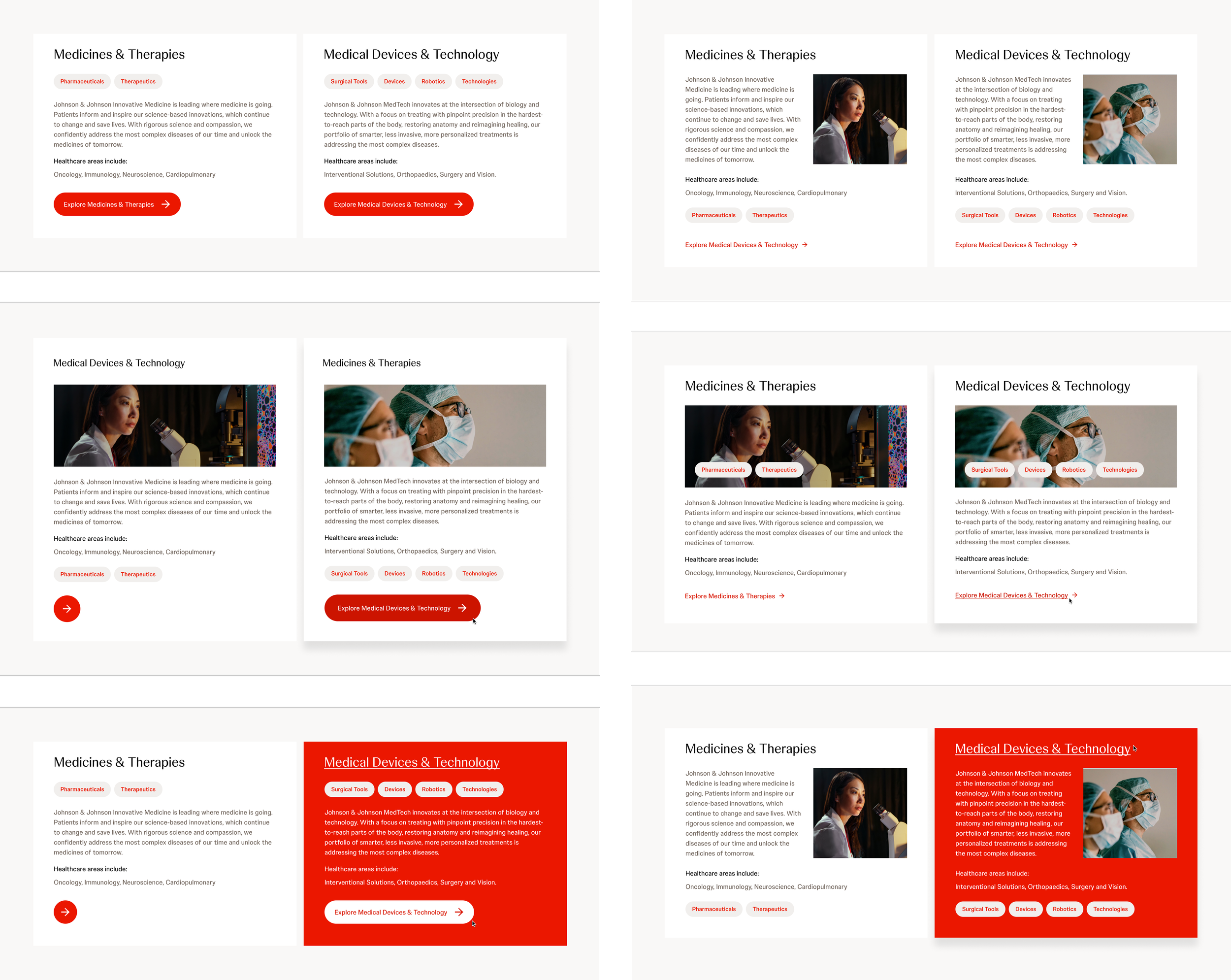
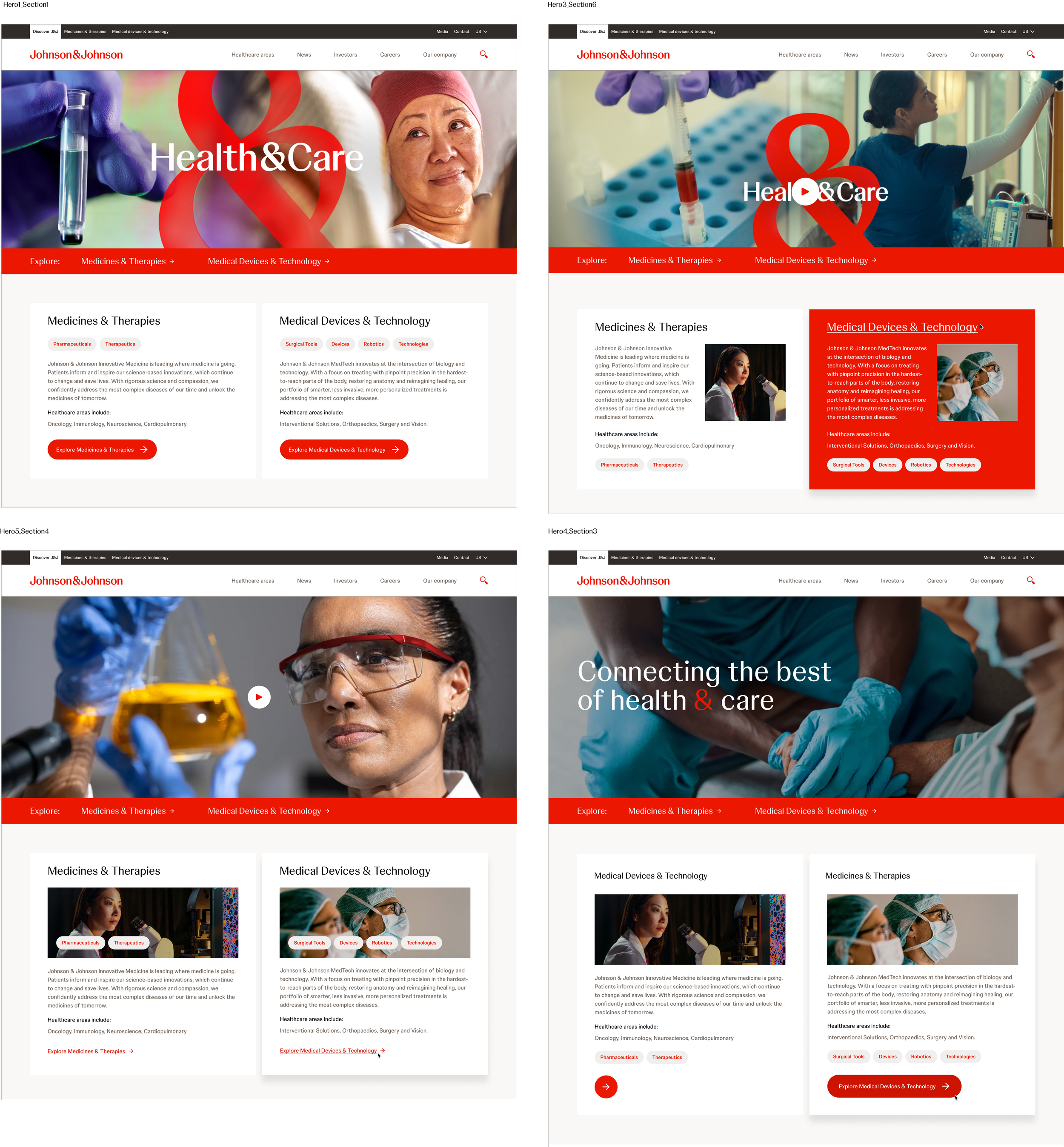
Those insights were translated into flows, wireframes, prototypes, and interface concepts.
I explored multiple directions, using Figma AI and UX Pilot where appropriate to accelerate early exploration and reduce time spent on repetitive production work.
Technology supported my process; it did not replace the thinking behind it.
03 — Validate
Design decisions were evaluated through testing, experimentation, and stakeholder feedback.
Testing helped assess potential improvements in live experiences, while design reviews and cross-functional collaboration helped surface technical, content, brand, and system considerations earlier in the process.
This allowed the work to evolve based on evidence rather than preference.
04 — Refine
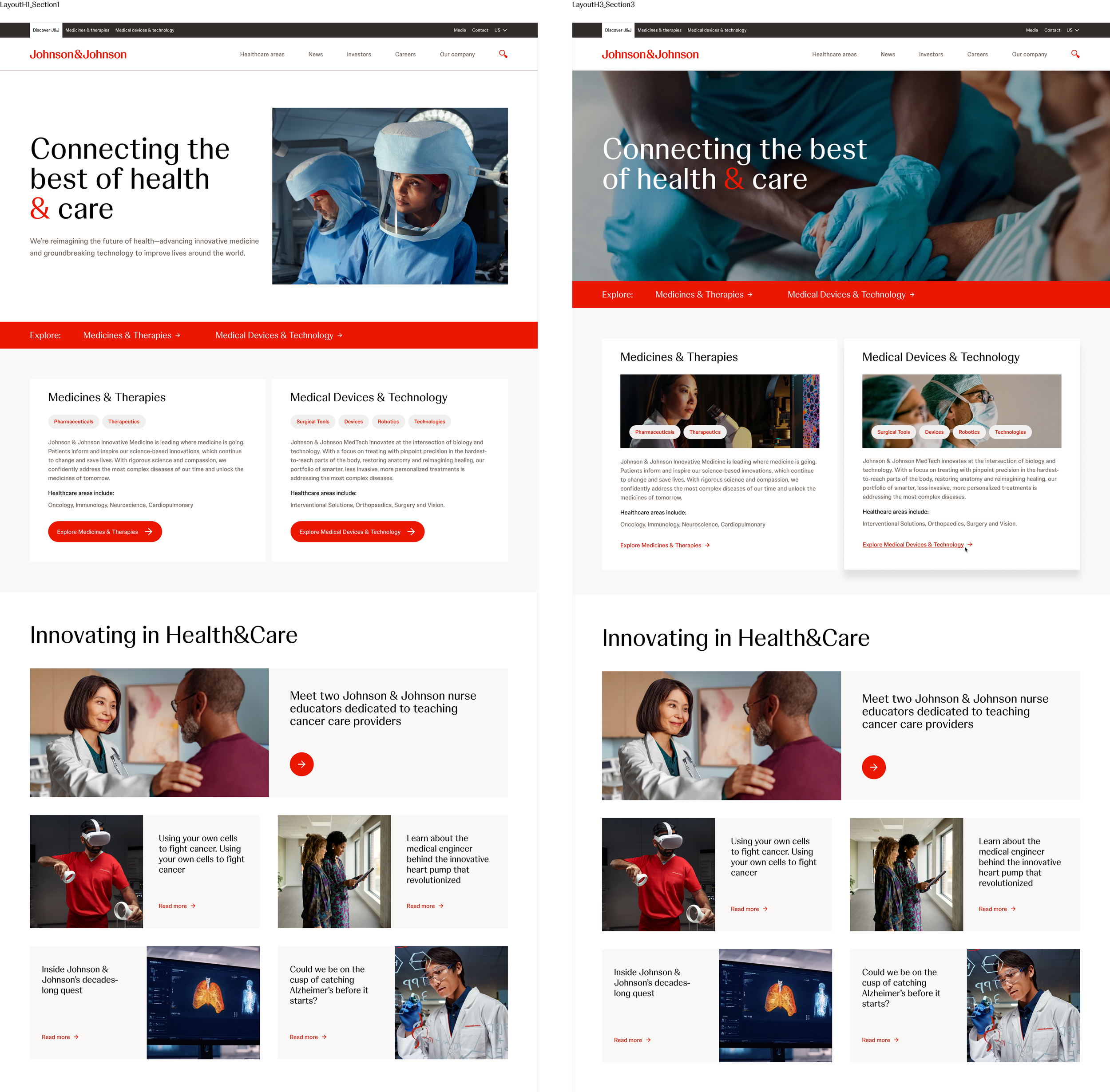
The most aligned versions were developed into responsive, high-fidelity experiences and considered as part of the broader ecosystem.
I worked with Product, Brand, Development, and Design System teams to ensure new experiences could integrate cleanly with existing patterns while also identifying opportunities for new components and modules.
The Research
Design decisions are stronger when behavior is part of the conversation.
Research was not treated as a separate phase of the work.
User needs, behavioral data, testing results, and business priorities continuously informed the direction of the experience.
Converting evidence into action
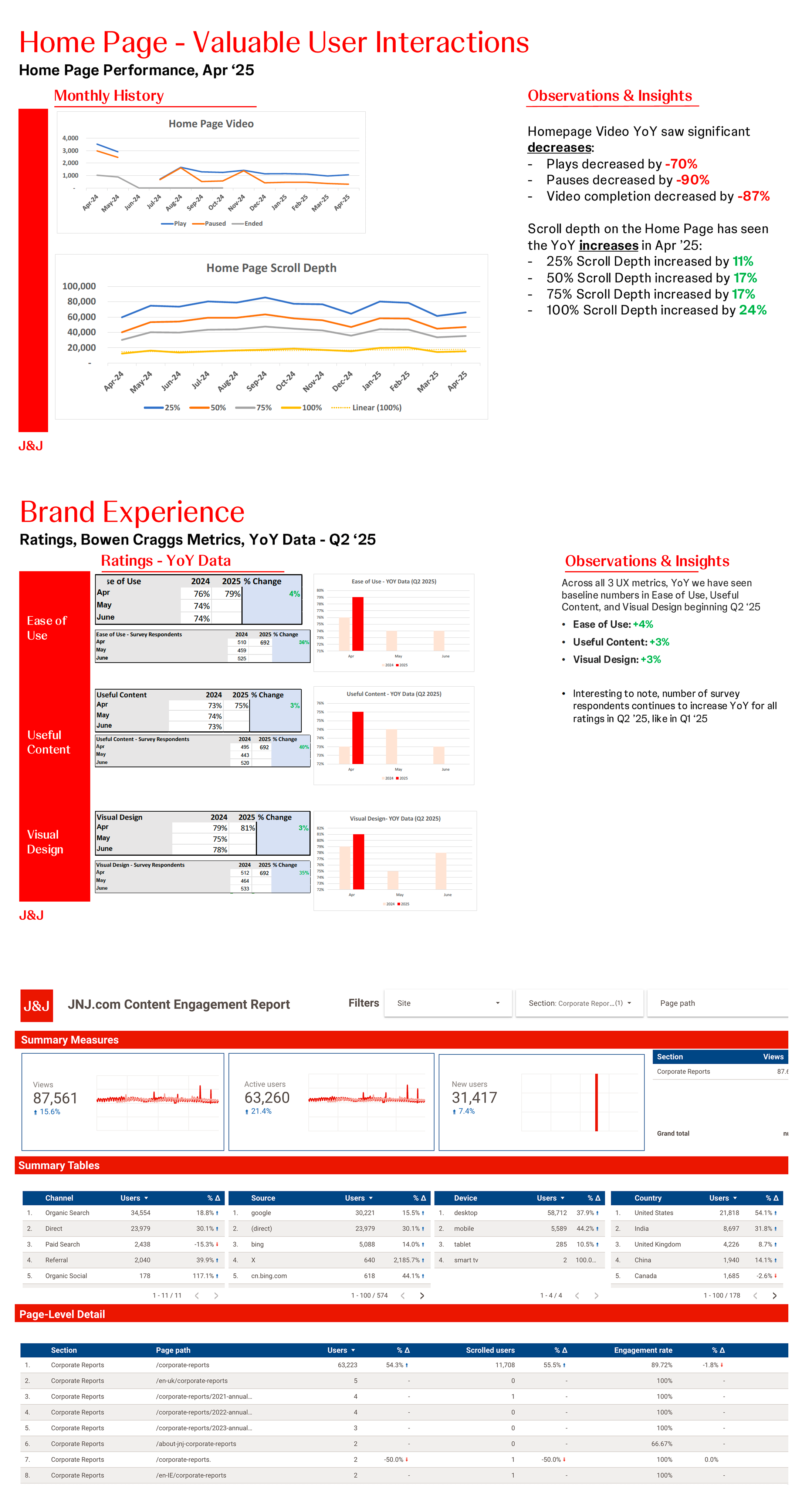
User research provided qualitative context. Behavioral insights helped reveal patterns at scale. Metrics gave us a way to evaluate potential improvements against real-world behavior.
Together, these inputs created a stronger basis for prioritization and design decisions.
The value was not simply knowing what users did.
It was understanding why, identifying where the experience could be improved, and using that knowledge to make more confident design decisions.
The Ideation
Explore broadly enough to find the right direction. Move quickly enough to learn.
Once the opportunity was understood, I translated insights into user flows and prototypes.
Early exploration focused on structure, hierarchy, interaction, and content relationships before moving into visual refinement.
Figma AI and UX Pilot became useful accelerators during this stage, helping shorten repetitive prototyping tasks and allowing more time to focus on the quality of the experience and the decisions behind it.
From concept to direction
Exploration was grounded in the same questions throughout:
What does the user need to understand?
What should happen next?
Where is unnecessary friction?
What can be simplified?
And how can the experience remain flexible enough to evolve?
The Refinement
Build the experience—and make sure it belongs to the system around it.
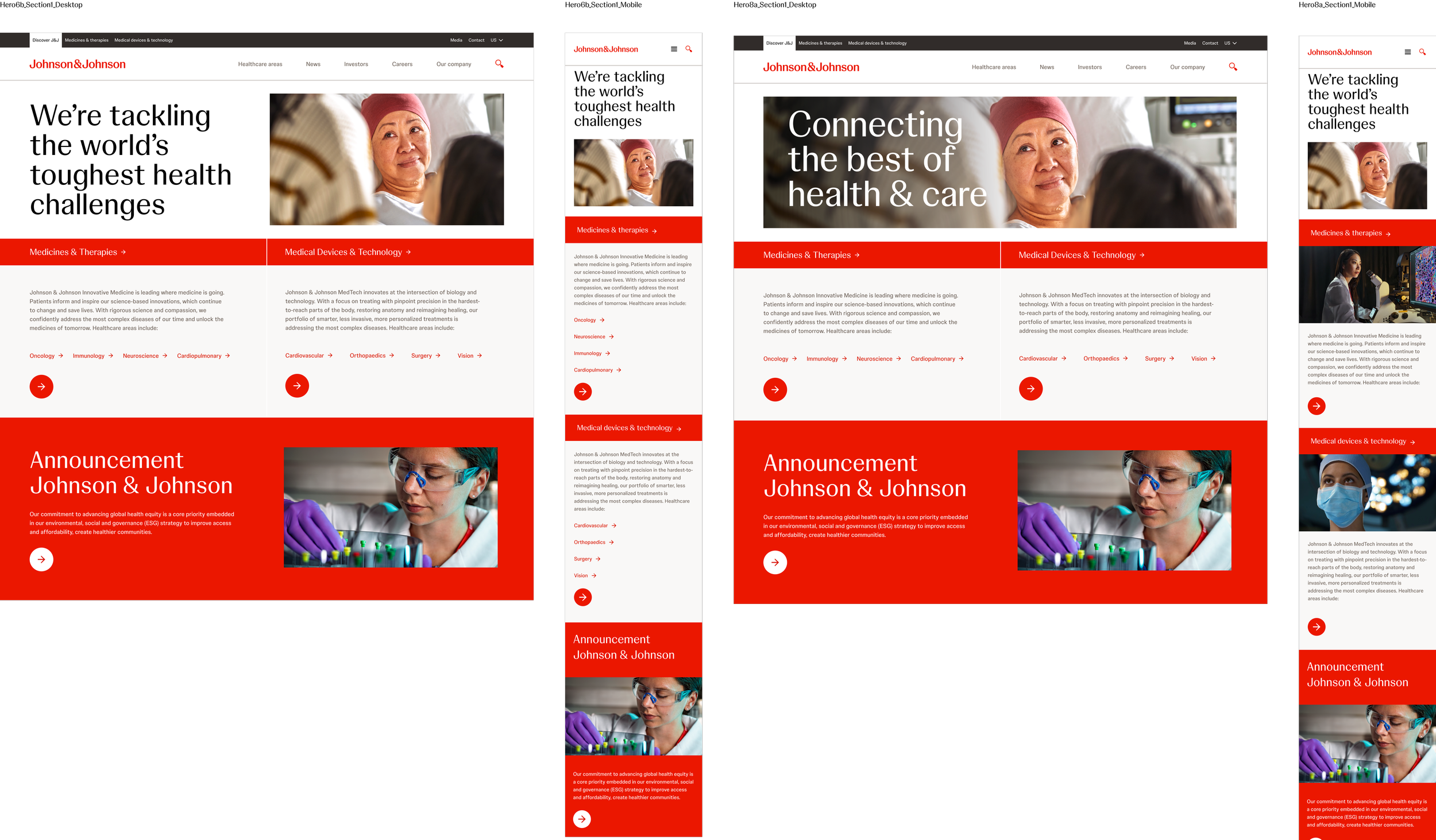
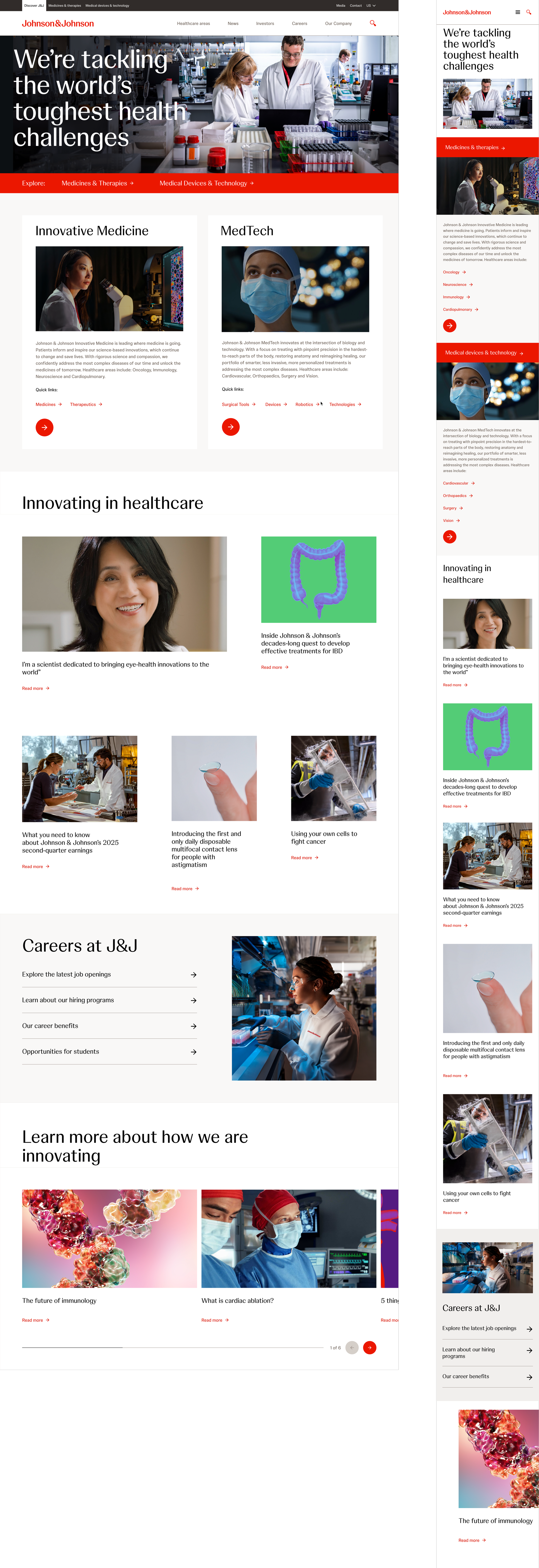
With an MVP in mind, I developed the experience into responsive, high-fidelity designs.
But refinement was not limited to individual screens.
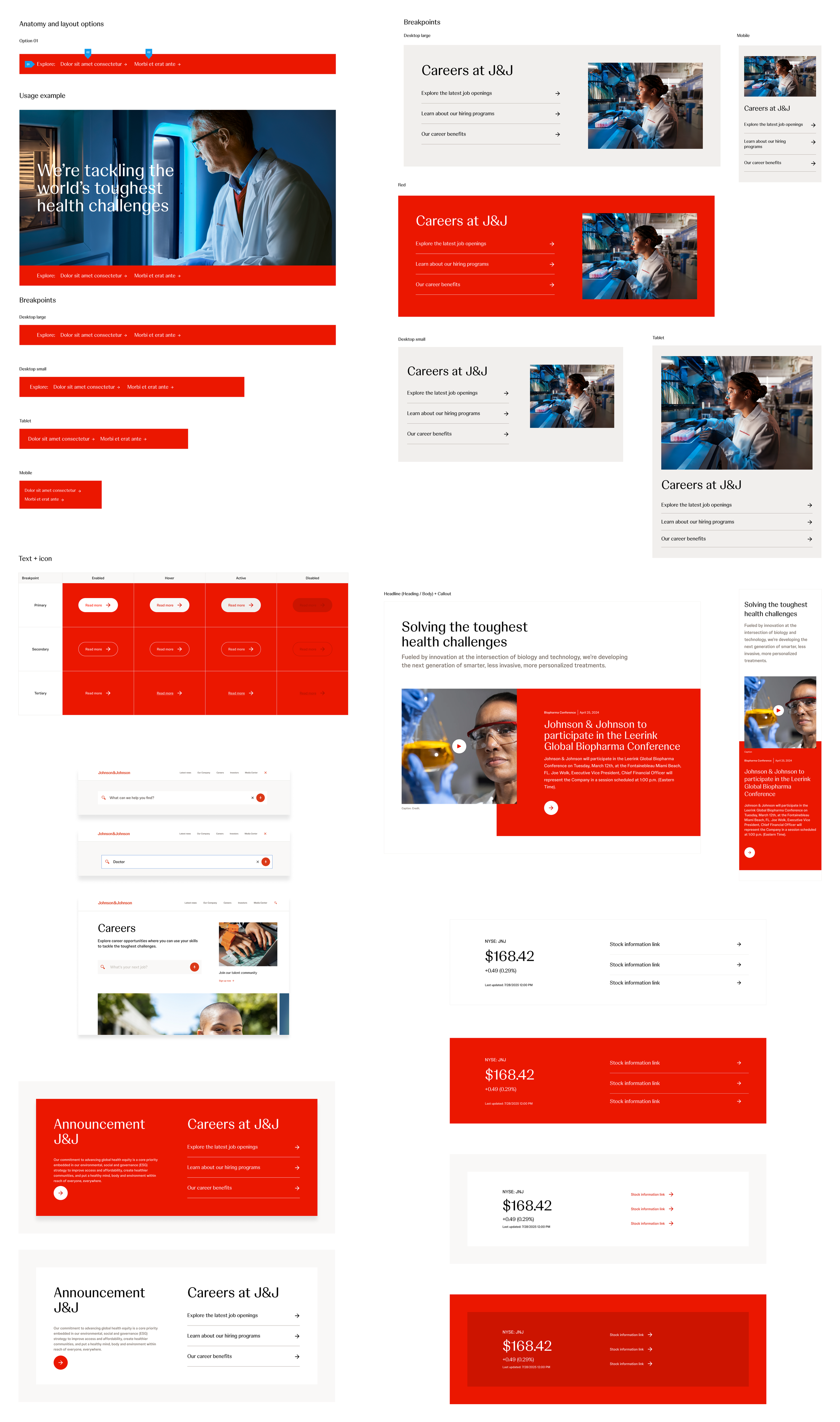
Each solution was considered within the larger ecosystem: how it behaved across devices, how it aligned with the brand, how it connected to existing patterns, and where reusable components could create consistency across future experiences.
Designing for the immediate need while thinking beyond it
Collaboration with Product, Brand, Development, and Design System teams helped ensure solutions were practical, scalable, and aligned with the broader organization.
Where existing patterns did not fully address the experience, I helped recommend opportunities for new components and modules that could extend the system rather than create one-off solutions.
The strongest solution was one that worked today—and made tomorrow easier.
The Result
Better experiences, stronger foundations, and a faster path from insight to design.
My work at Johnson & Johnson contributed to the ongoing evolution of a large-scale corporate digital ecosystem.
Across the initiatives I supported, the work brought together user research, behavioral insight, experimentation, product design, responsive UI, AI-assisted workflows, and cross-functional collaboration.
The work established an evidence-informed approach to improving digital journeys while accounting for enterprise, brand, and system constraints.
The Conclusion
Design for the experience in front of you—and the ecosystem behind it.
At Johnson & Johnson, the work reinforced the value of approaching product design at two levels at once:
Solve the immediate customer problem. Build the foundation for what comes next.
That meant using evidence to understand the opportunity, designing with intention, validating decisions through testing and behavior, and collaborating across disciplines to create experiences that could evolve with the organization.